Distinguishing Clear Route Opening From Overall Footprint
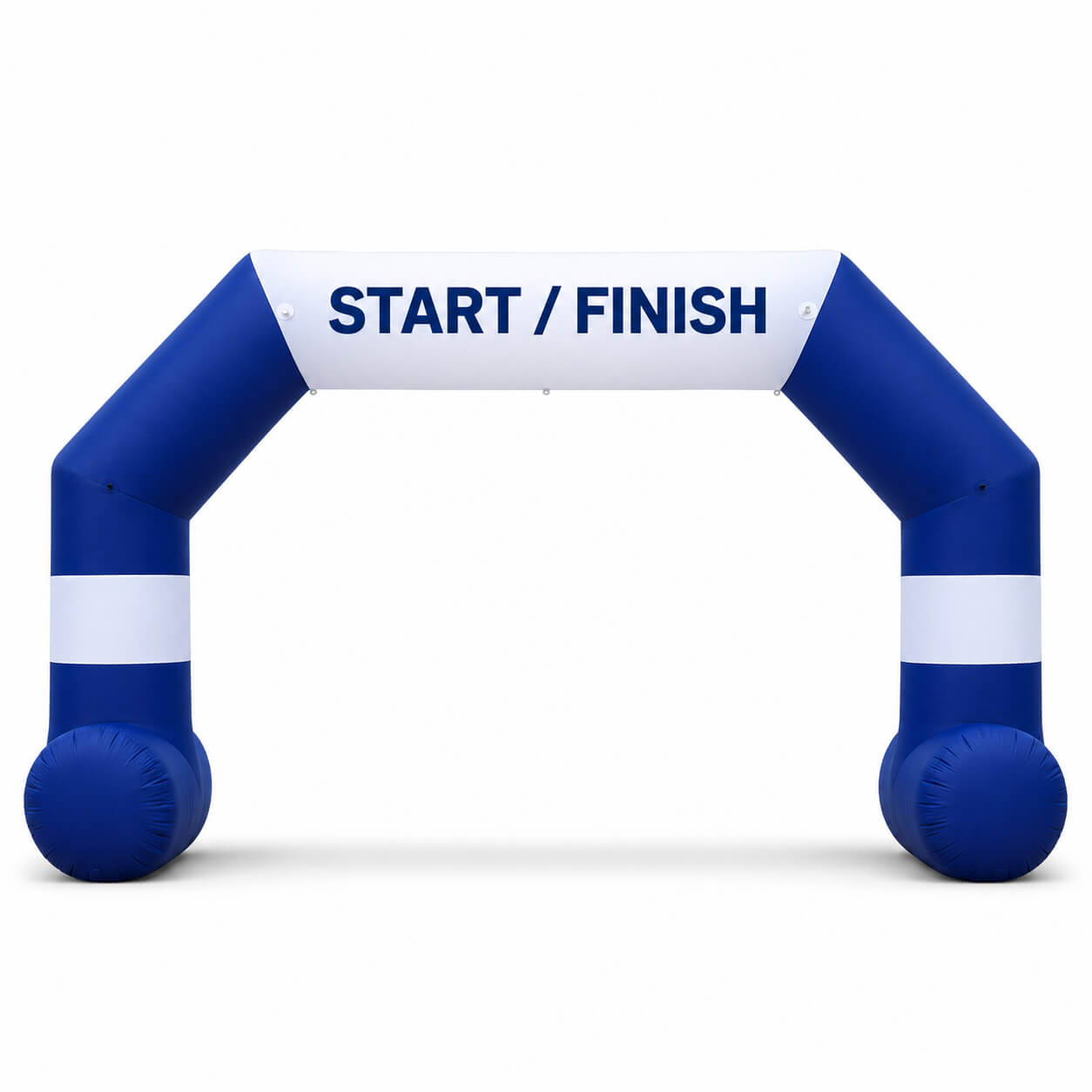
When ordering a custom inflatable finish line or race arch, always specify both the required interior clear opening (width and vertical clearance) and the maximum exterior street width. Inflated leg columns and external ballast bags consume lateral space on both sides of the course.
Timing mats, finish-line cameras, and bike-handling clearances for cycling races must fit cleanly inside the unobstructed opening without touching leg skirts.
Road-Course Asphalt Ballast and Safe Tether Routing
Open public roads and city plazas prohibit ground drilling. Race crews stabilize arches using site-specific ballast weights at both feet combined with guy lines anchored outside the athlete corridor.
- Never string tether ropes across runner, cyclist, or spectator lanes.
- Route blower power cables underneath protective ramps or completely off the course.
- Monitor changing wind gusts—especially on exposed coastal boulevards or mountain passes—and deflate immediately if site safety thresholds are exceeded.
Coordinating Multi-Sponsor Header Layouts and Course Markers
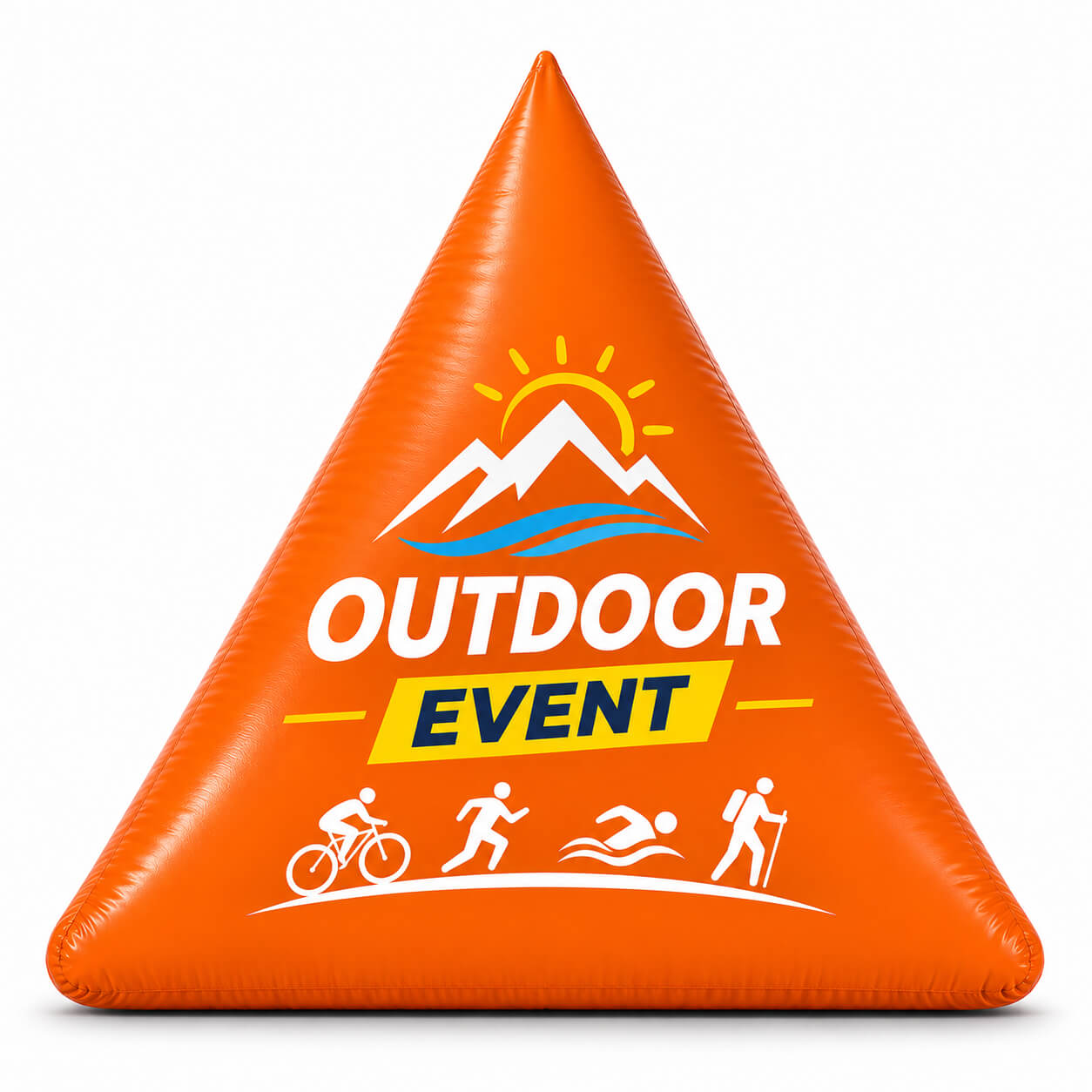
Supply authorized sponsor logos early so text scale remains readable from finish-line photography distances. Pair start/finish arches with freestanding course-side kilometer markers positioned cleanly off the racing surface.
Measurements to Confirm Before Quoting
Provide clear span width, vertical clearance, road surface, electrical supply, and sponsor logo count for an accurate race arch specification.